

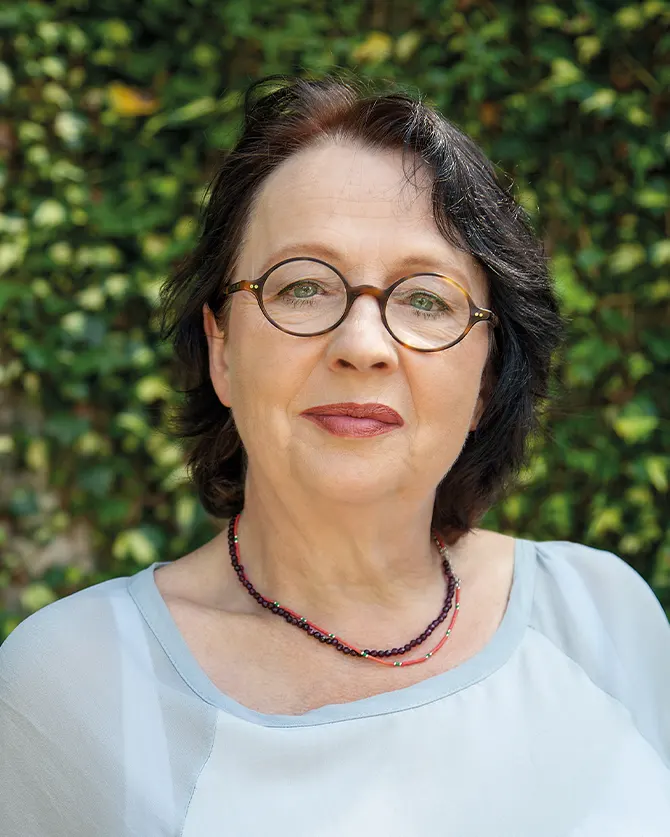
Katja Lange-Müller (Germany)
Prose writer and playwright. Katja Lange-Müller was born in 1951 in Berlin (formerly East Berlin). As a prominent and highly acclaimed figure in contemporary German literature, her writing often mirrors the complexities, absurdities, and human vulnerabilities of a divided and later reunited Germany. In her youth, she was expelled from school for political nonconformity, after which she trained as a typesetter and worked for several years as a nurse in a psychiatric hospital. In the late 1970s, she studied at the Johannes R. Becher Institute for Literature in Leipzig.
In 1984, she emigrated from East Germany (GDR) to West Berlin, and just a year later published her acclaimed debut book, Wehleidige Lust (Melancholic Pleasure, 1985), which won the Ingeborg Bachmann Prize for encouragement.
Over her distinguished career, Lange-Müller has published numerous novels, novellas, and short story collections. Some of her most celebrated works include Kaspar Mauser – Die Unschuld von Berlin (1988), Verfrühte Tierliebe (1995), and her widely translated major novel Böse Schafe (Bad Sheep, 2007), which was shortlisted for the German Book Prize. Her narrative style is deeply unique—marked by a sharp, dark wit, bittersweet irony, and an empathetic eye for societal outcasts and marginalized characters.
Lange-Müller is the recipient of many of Germany’s most prestigious literary honors, including the Alfred Döblin Prize, the Berlin Literary Award, the Mainzer Stadtschreiber, and the Kleist Prize. She is a member of the German Academy for Language and Literature.