

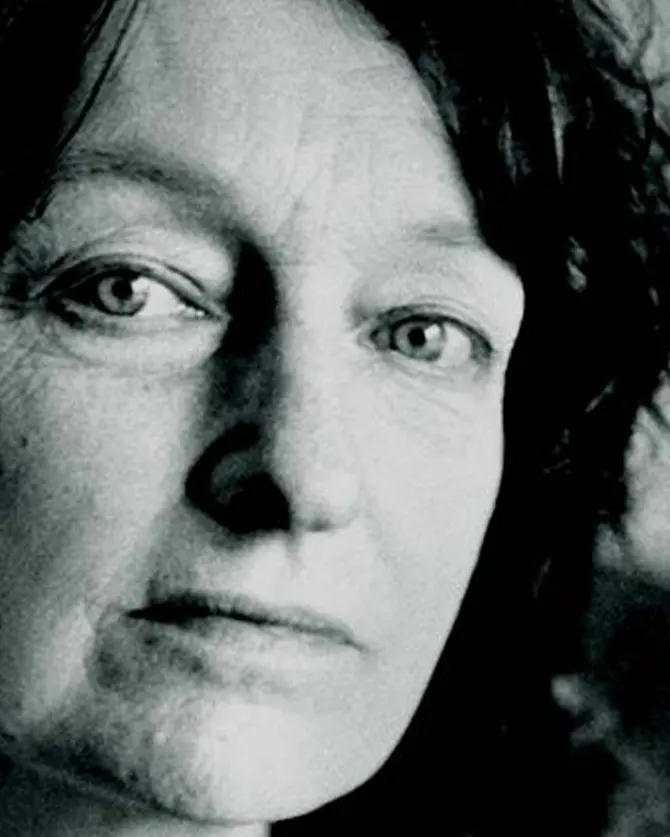
Anthea Nicholson
Artist and prose writer. Visual artist Anthea Nicholson began writing fiction later in life. In 2005, she earned her Master’s degree in Creative Writing from Bath Spa University (UK), after which she spent a year as a writer-in-residence on a Dartmoor sheep farm. Together with her Georgian partner, Anthea Nicholson is building a house and conserving wildlife near Tbilisi. Nicholson lives in Bristol, England, and constantly travels between these two places.
The Banner of Passing Clouds, published by Granta Books in 2013, is Anthea Nicholson’s debut novel. The author is currently working on her second novel.
Anthea Nicholson’s participation in the Tbilisi International Literature Festival is supported by the British Council in Georgia.
The Banner of Passing Clouds
(Excerpt from the novel)
He followed the refugee woman into the shed. The city was full of refugees now, and those who, like them, had found shelter were considered the lucky ones. They had arranged this rickety shed to look like a home. Straw-stuffed mattresses lay on the floor, alongside a wobbly table, three-legged stools, and a tin stove used for cooking. What little clothing they owned hung from nails, and a paper icon of Saint George was pinned high up on a wooden ledge. He greeted the two men sitting at the table, who thanked him for the water. When the woman invited him to sit and eat with them, he couldn’t refuse. The woman set water on the stove to heat up and brought out beans and a bit of dry bread. The men stood up, while the woman sat down with a sigh and began massaging her feet. He broke off the crust of the bread and started eating the beans; the woman didn’t take her eyes off him. When he finished eating, he thanked her and prepared to leave, but the woman pleaded, “No, don’t leave, stay.” She leaned toward him, beat her fist against her chest, and said, “I was a teacher. Everything was fine, I had a beautiful house. Look at him, my husband—a lazy drunk now, but not so long ago, he was famous.” Then she turned to the man, her husband, who grinned foolishly and nodded his head. His friends slapped him on the back and chimed in, “Of course, he was famous not so long ago! Why don’t you show our guest? Go on, man, get up and show him what you can do.” The man was confused at first, then he stood up, took a breath, and began to sing. The woman covered her face with her hands, her brow furrowing. The man’s high, tender voice sang of a small industrial town he would leave behind, and of his beloved vineyard, planted with his own hands, which he wouldn’t see again for a very long time.
Translated from English by Davit Gabunia